EA News and Activities
EA and MEA to Study Battery Applications in Electricity Distribution Two-Year Cooperation Framework Covers Six Areas Second-Life Battery Study to Explore the Reuse of Used Batteries for Energy Storage
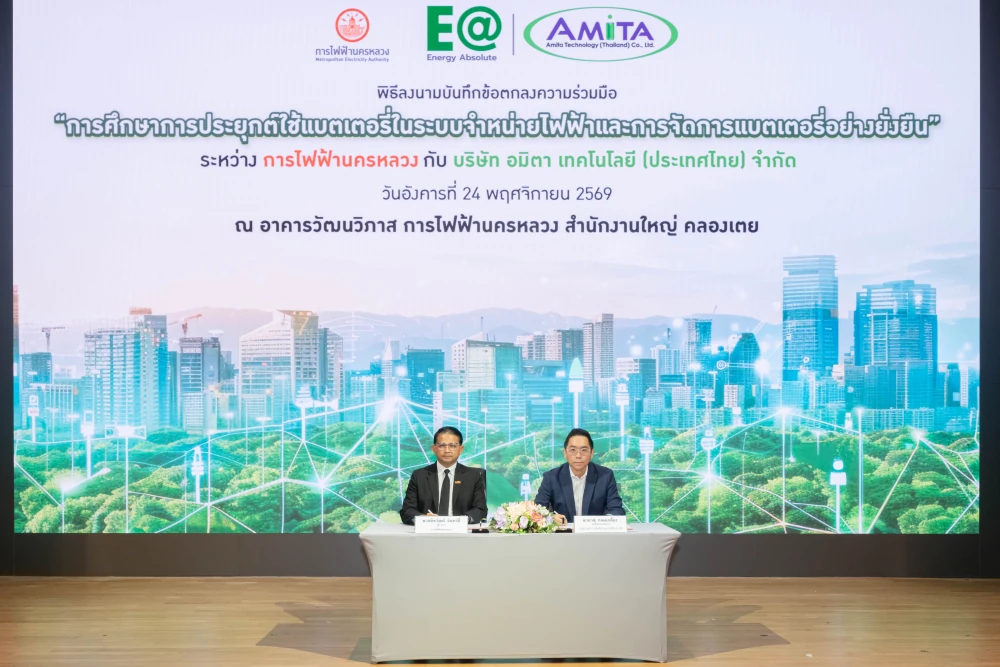
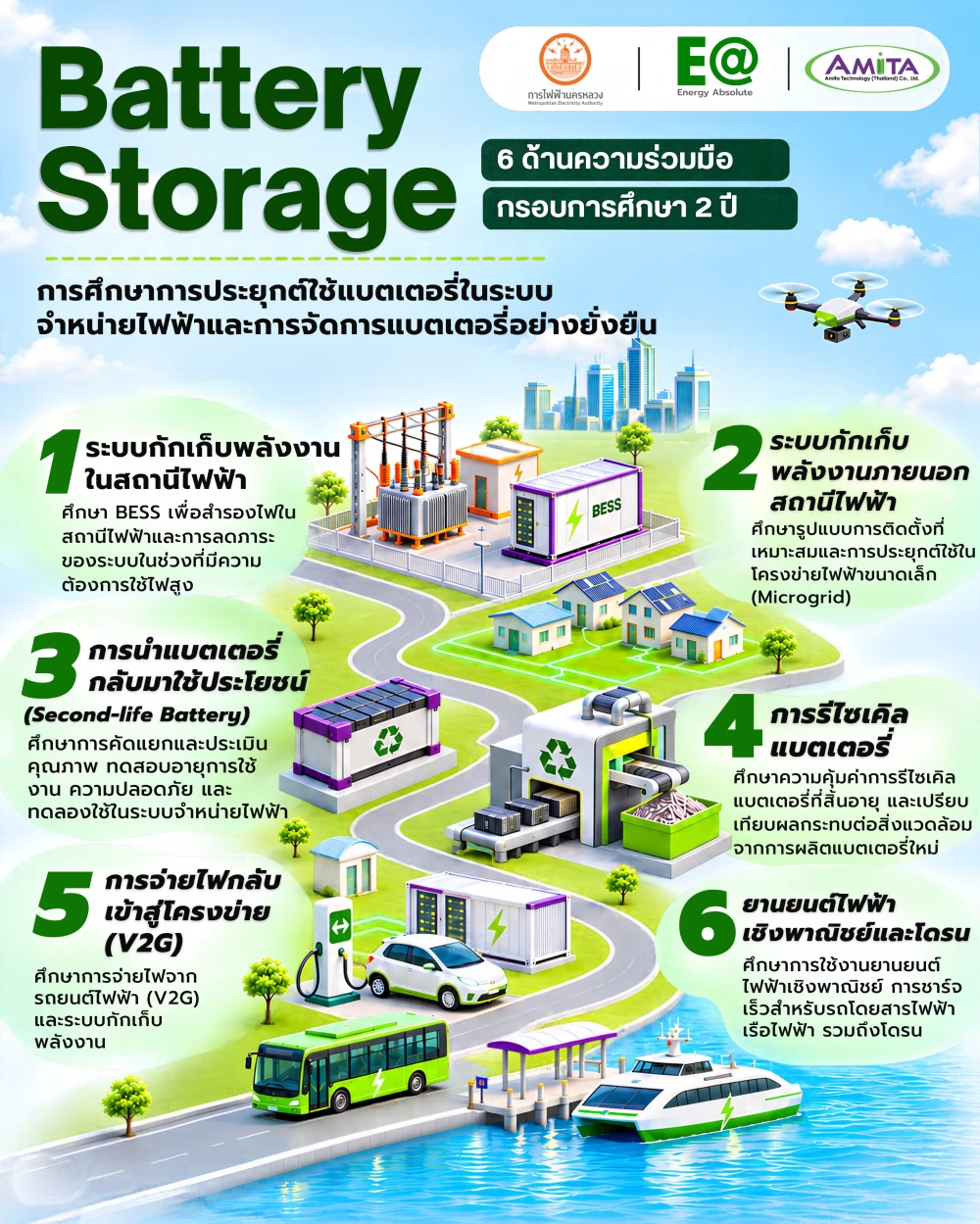
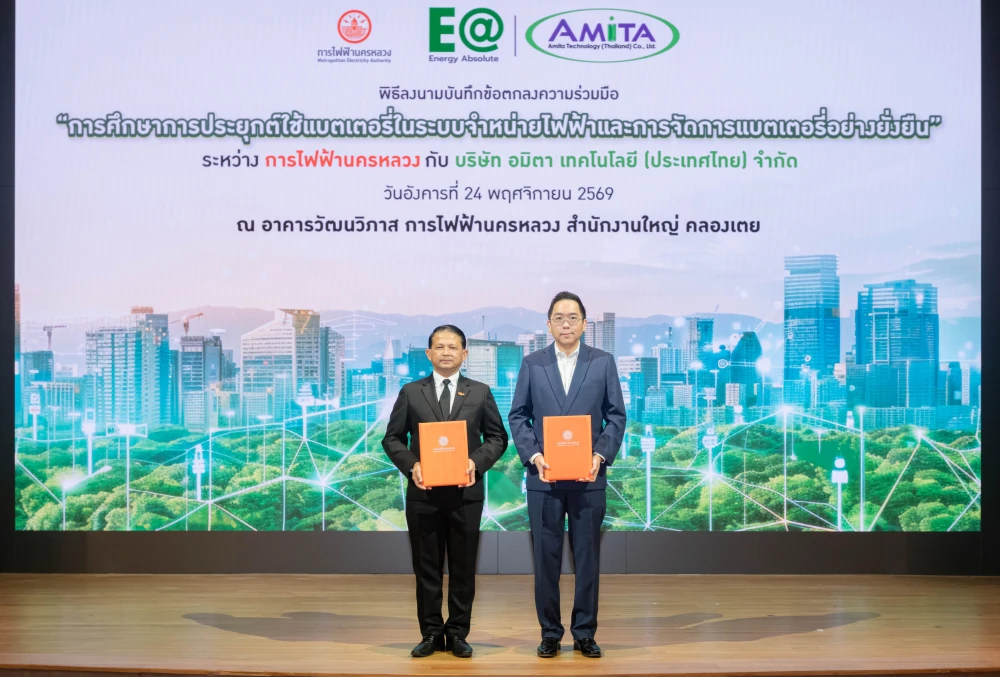
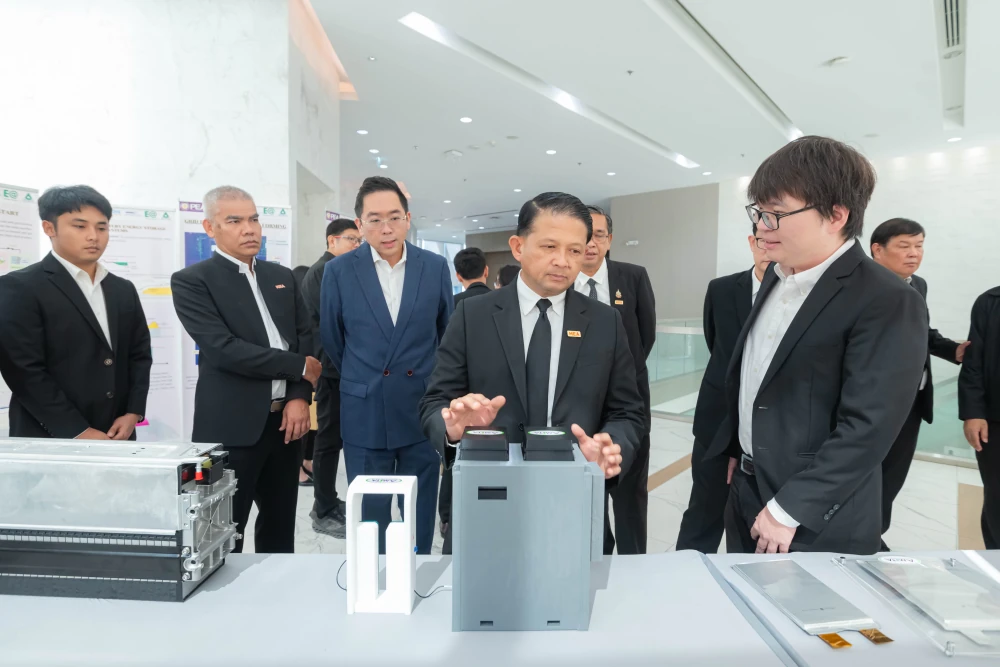
BANGKOK, 24 November 2026 — Energy Absolute Public Company Limited (EA) is extending its expertise in battery development and manufacturing to the study of battery applications in electricity distribution. Under a two-year memorandum of understanding with the Metropolitan Electricity Authority (MEA), titled “Study of Battery Applications in Electricity Distribution Systems and Sustainable Battery Management,” the parties will examine battery energy storage systems both within and outside electrical substations. They will also assess whether batteries that have already been used can be safely repurposed for energy storage.
The cooperation covers six areas of study. These include the use of battery energy storage systems (BESS) within substations to provide backup power and reduce system load during periods of high electricity demand, as well as suitable installation models outside substations and applications in microgrids. Under the Second-Life Battery approach, the parties will study how to sort and assess used batteries, then test their remaining service life, performance and safety before trialling them in the electricity distribution system. They will also assess the economic viability of recycling end-of-life batteries and compare the environmental impacts of manufacturing new batteries, repurposing used batteries and recycling them. The remaining areas cover the feasibility of supplying electricity back to the grid from electric vehicles through vehicle-to-grid (V2G) technology and from battery storage systems through BESS-to-grid applications, as well as commercial electric vehicles, fast charging for electric buses and ferries, and drone technology.
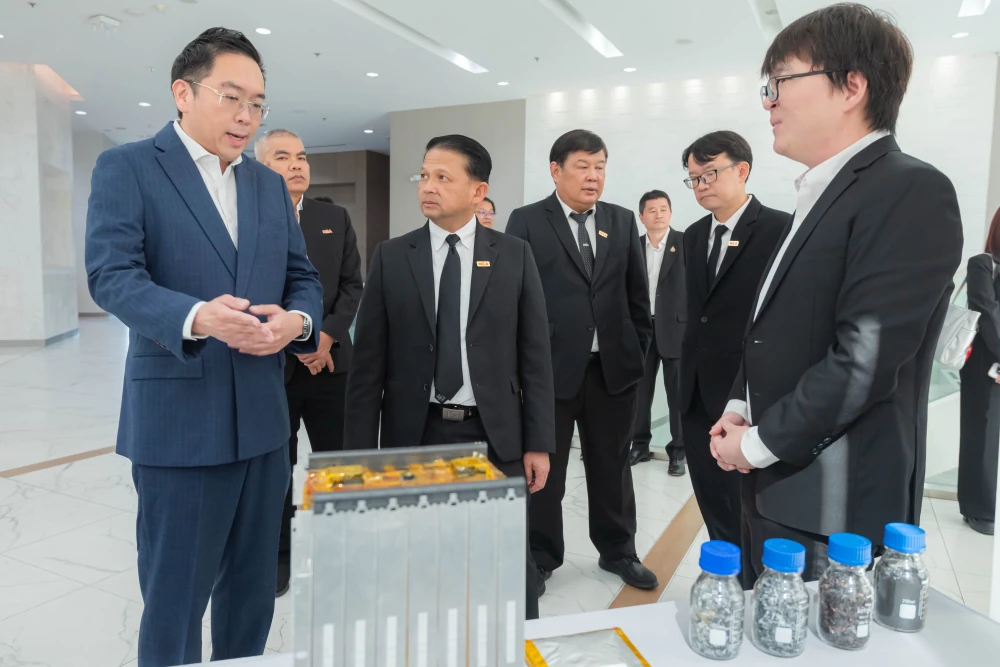
EA and MEA will jointly design and test battery energy storage systems, combining the battery development and manufacturing expertise of Amita Technology (Thailand) Co., Ltd. (AMITA), an EA group company, with MEA’s experience in planning and operating electricity distribution systems. AMITA will also share its knowledge of energy storage system design and battery condition assessment with MEA’s technical personnel.
Mr. Ditchawat Chan-ei, Governor of the Metropolitan Electricity Authority (MEA), said, “The growth of renewable energy and electric vehicles is giving batteries a greater role in managing power systems. This collaboration brings together MEA’s more than six decades of experience in planning, developing and operating electricity distribution systems with AMITA’s expertise in battery research, development, manufacturing and testing. Over the two-year cooperation period, we will develop technical knowledge, practical approaches and the skills of our personnel. This will lay the groundwork for applying battery technology in real-world settings and help prepare Thailand’s electricity system to accommodate clean energy more effectively.”
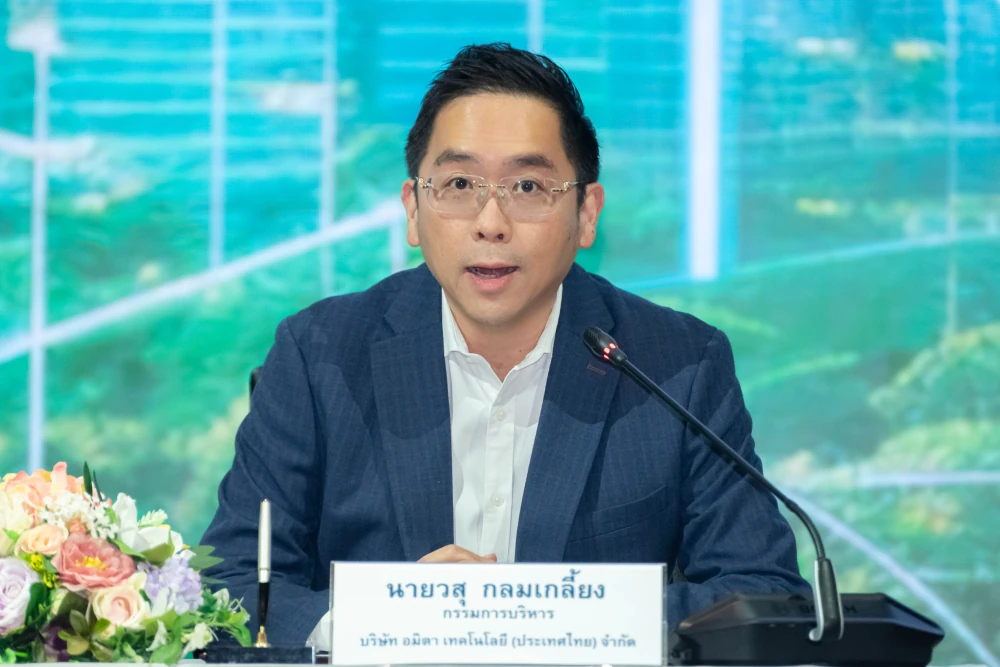
Mr. Vasu Klomkliang, Director of Amita Technology (Thailand) Co., Ltd., said, “EA Group believes the energy transition will deliver meaningful benefits when people and businesses can use clean energy with confidence and Thailand can develop technologies suited to its own needs. In the longer term, we want households and businesses to have more dependable electricity systems and the country to make better use of the batteries it already has. This collaboration also gives Thai engineers and technical personnel an opportunity to learn from real challenges in the power system. By building local capabilities in system design, testing and maintenance, Thai teams will be better equipped to adapt technology to local needs and expand domestic manufacturing and services.”
The collaboration with MEA forms part of EA’s vision to develop a clean energy ecosystem connecting renewable power, batteries, electric vehicles and energy infrastructure. EA Group’s experience spans renewable electricity generation, battery development and manufacturing, energy storage applications, electric vehicles and charging stations. The joint study will draw on this experience to explore ways for Thailand’s electricity system to accommodate more clean energy while making better use of batteries throughout their life cycle, from initial use and second-life applications to recycling.